
Rüdiger Dorn’s Goa combines auctions with a personal development engine, asking players to turn goods, ships and money into increasingly effective actions. The Quined Games edition revises the presentation and thematic language, placing trading houses, depots and outposts at the center of the economy.
What changes between editions
The earlier Destination: Spice Islands and A New Expedition versions use plantations, colonies and colonists. The newer terminology uses depots, outposts and contracts; ducats become pardaos, expeditions become explorations, and extra-action cards become compasses.
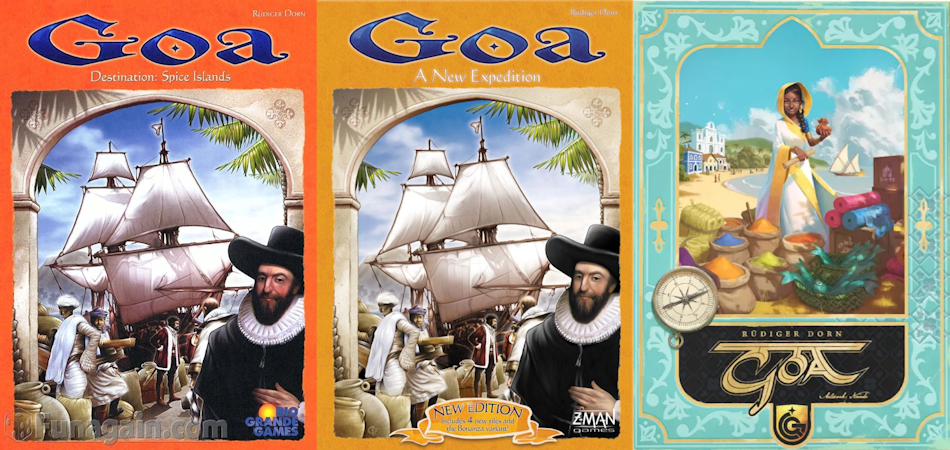
The five goods in the revised presentation are coir, turmeric, pepper, silk and dried fish. The updated art and components accompany clarified rules, but the core interaction remains a contest over auction opportunities and the resources needed to improve a player’s trading capabilities.
How an eight-round game works
Play is split into four Day rounds and four Night rounds. Each phase begins with 25 tiles arranged in a five-by-five grid after four of its 29 tiles are removed.
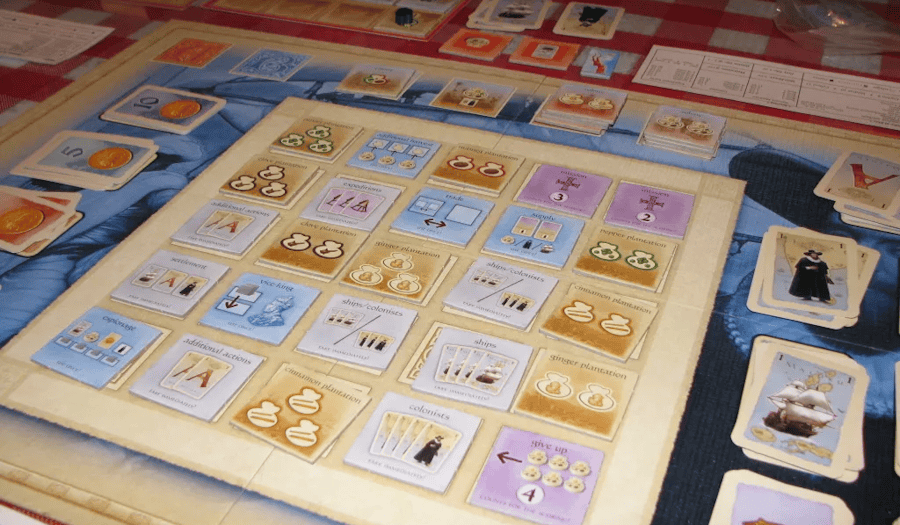
- The first player places the nazar stone beside a tile. In the opening round of a phase it sits along the grid’s edge; later rounds can use empty spaces.
- Players mark an adjacent chain of tiles, with orthogonal or diagonal connections allowed between successive auction selections.
- The marked items are auctioned in order. Each bidder gets one opportunity to increase the offer or pass.
- The auctioneer can accept the highest bid and receive the money, or buy the tile from the bank for one less than that bid. An item with no bids is free to its auctioneer.
- After auctions, players take three actions apiece in turn order, followed by any extra actions bought with compasses.
Winning the nazar stone also grants an extra-action card. Auction income therefore matters alongside the value of the tile itself: selling an opportunity can fund a later purchase.
The development engine
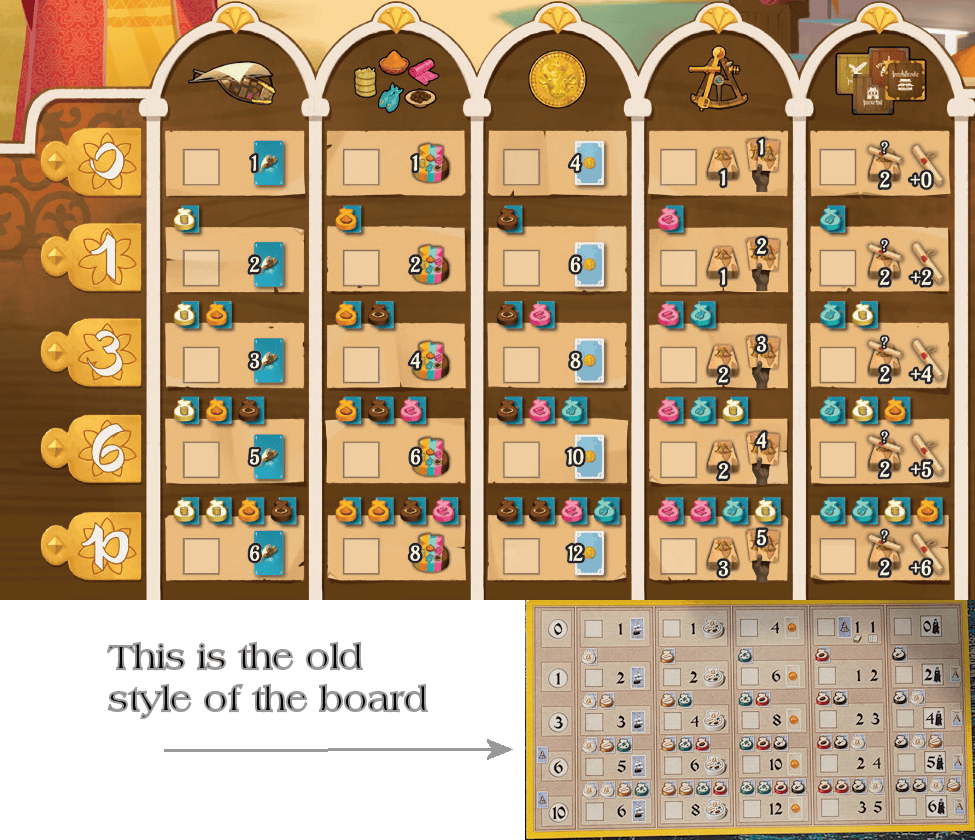
Actions cover progress, shipbuilding, production, taxes, exploration and outpost establishment. Progress consumes goods and the ships needed to transport them, making each advancement a decision about future efficiency rather than a free upgrade.
Across the five development levels, shipbuilding provides 1/2/3/5/6 ships; production provides 1/2/4/6/8 goods; taxes provide 4/6/8/10/12 coins. Exploration draws 1/1/2/2/3 cards with hand limits of 1/2/3/4/5.
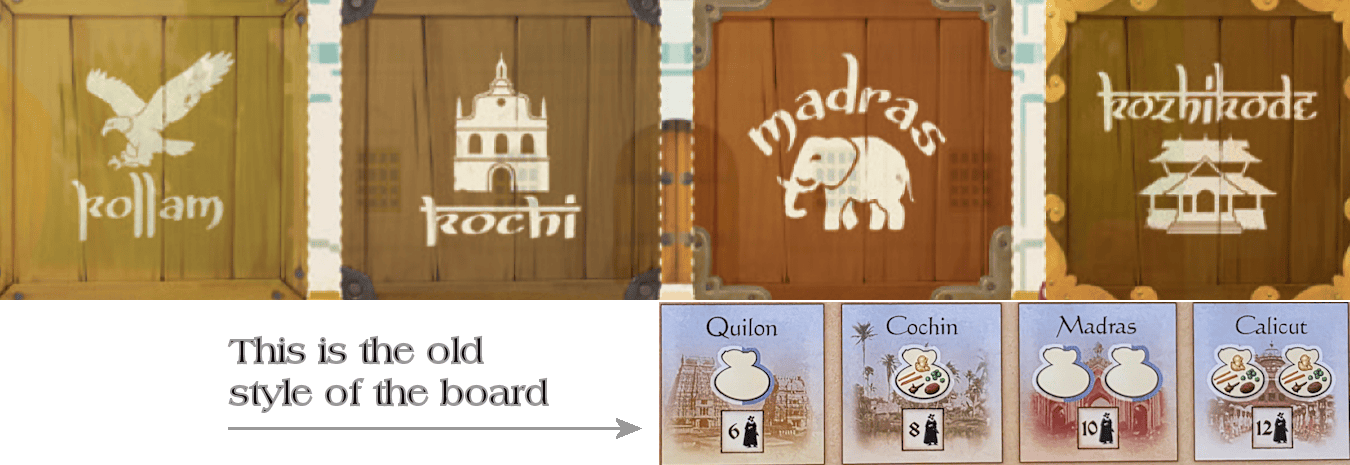
Outposts require 6, 8, 10 or 12 contracts. A player adds the development track’s contribution to values on two drawn exploration cards to test whether the chosen outpost is established.
Where the points come from
Each development track scores 0/1/3/6/10 points according to its final level. Outpost totals use the same progression, while matching exploration-card symbols can score up to 15 points. Eligible single-good depots and special tiles contribute additional points, and the richest player receives three bonus points.
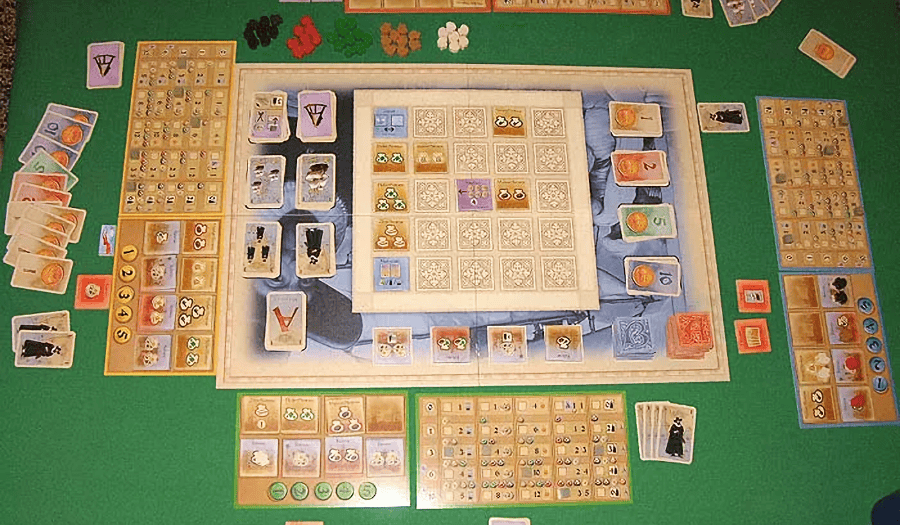
The result is a game in which cash, auction control and action efficiency remain closely connected.