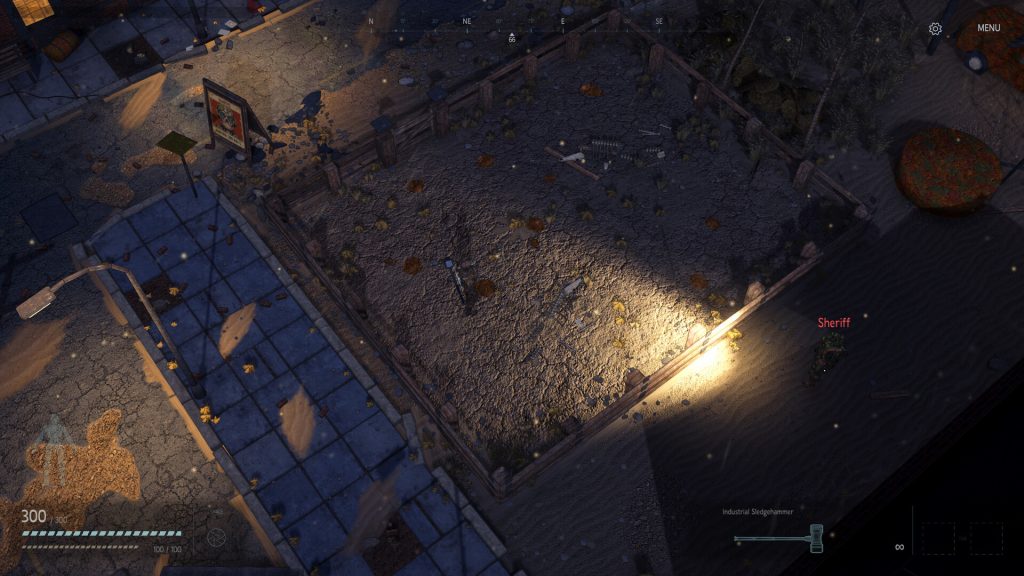
SANDSTRIKE asks its protagonist to pass a test usually aimed at website visitors in reverse: convince the machines that there is no human present. In a new development account, creator Melincean Vladimir describes a top-down action RPG built around a human brain inside a mass-produced robot, with dialogue and combat offering different ways through a machine-controlled wasteland.
The Steam page currently lists March 16, 2027 as the planned release date. It also identifies the project as an upcoming Early Access game, so the developer’s descriptions of working systems should not be mistaken for confirmation that the public Steam release is already available.
The disguise depends on behavior
Humanity has lost its war and retreated underground, where air is running out. A volunteer is sent to the surface in a robot chassis to reach MOLOCH, the intelligence governing the machines. Surviving that journey involves more than choosing a convincing appearance.
Conversation can expose the traveler. An apparently ordinary question to a bartender produces a report on oil pressure, while saying thank you can attract a sheriff’s attention. Players must answer according to machine protocol, explain away suspicious behavior or imitate a malfunction.
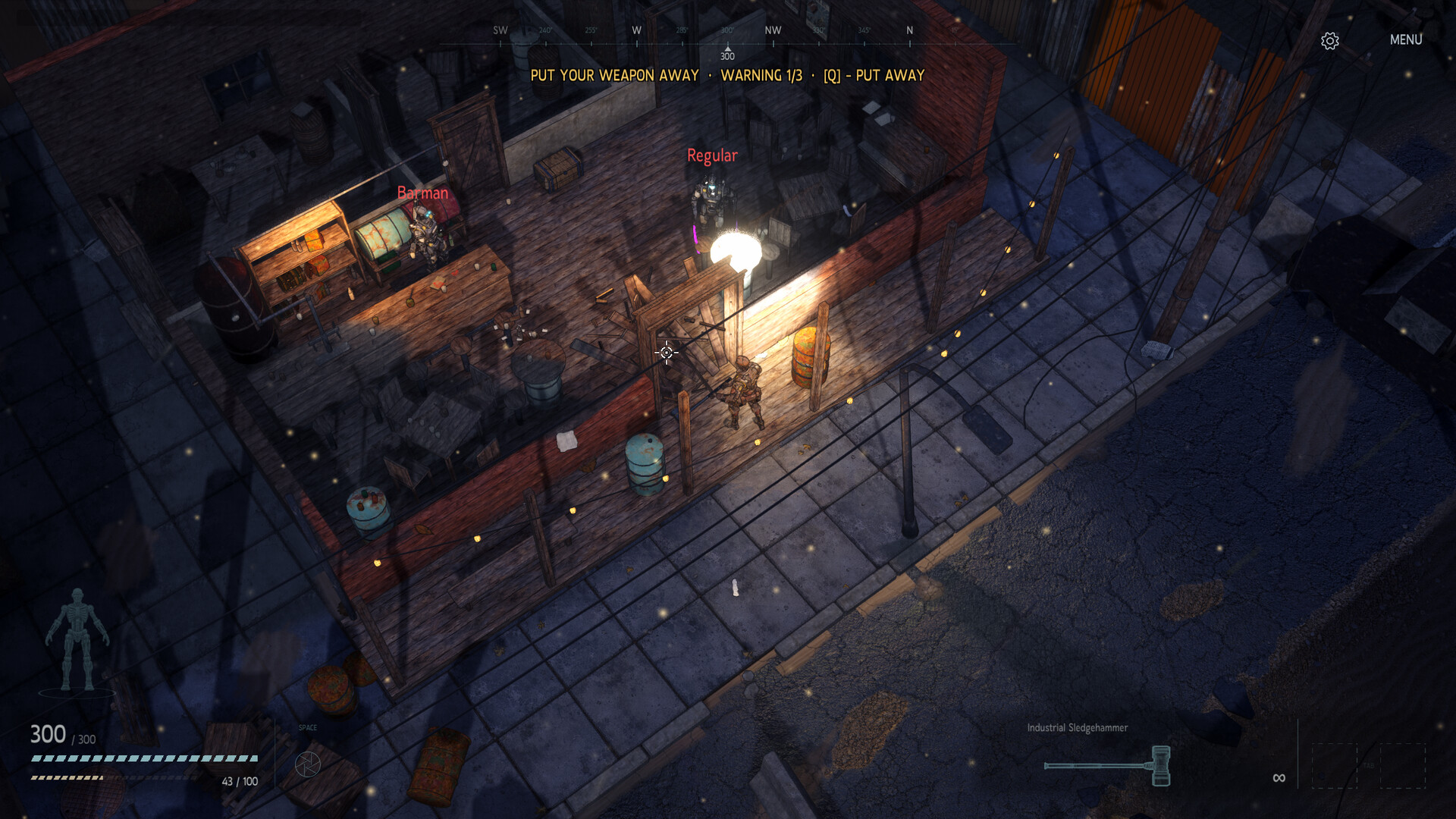
At a town gate, guards check a robot’s serial identification. Arriving without the required plate can lead to interrogation; ignoring access restrictions brings three warnings before the guards open fire. According to the developer, many encounters can instead be resolved through negotiation, while raising an alarm draws a much wider response.
Why a machine society has familiar jobs
The setting explains its sheriffs, bartenders and patrols through a prewar reconstruction protocol. MOLOCH restored cities by filling their recorded positions, even though people were no longer part of that restoration. Damaged communications and interference from sand leave local identity checks important while the network is being repaired.
The initial region includes the Ark, Node 67, a factory and a MOLOCH substation. Travel on the world map has a day-and-night cycle and random encounters, while abandoned buildings contain newspapers and letters from before the disaster.
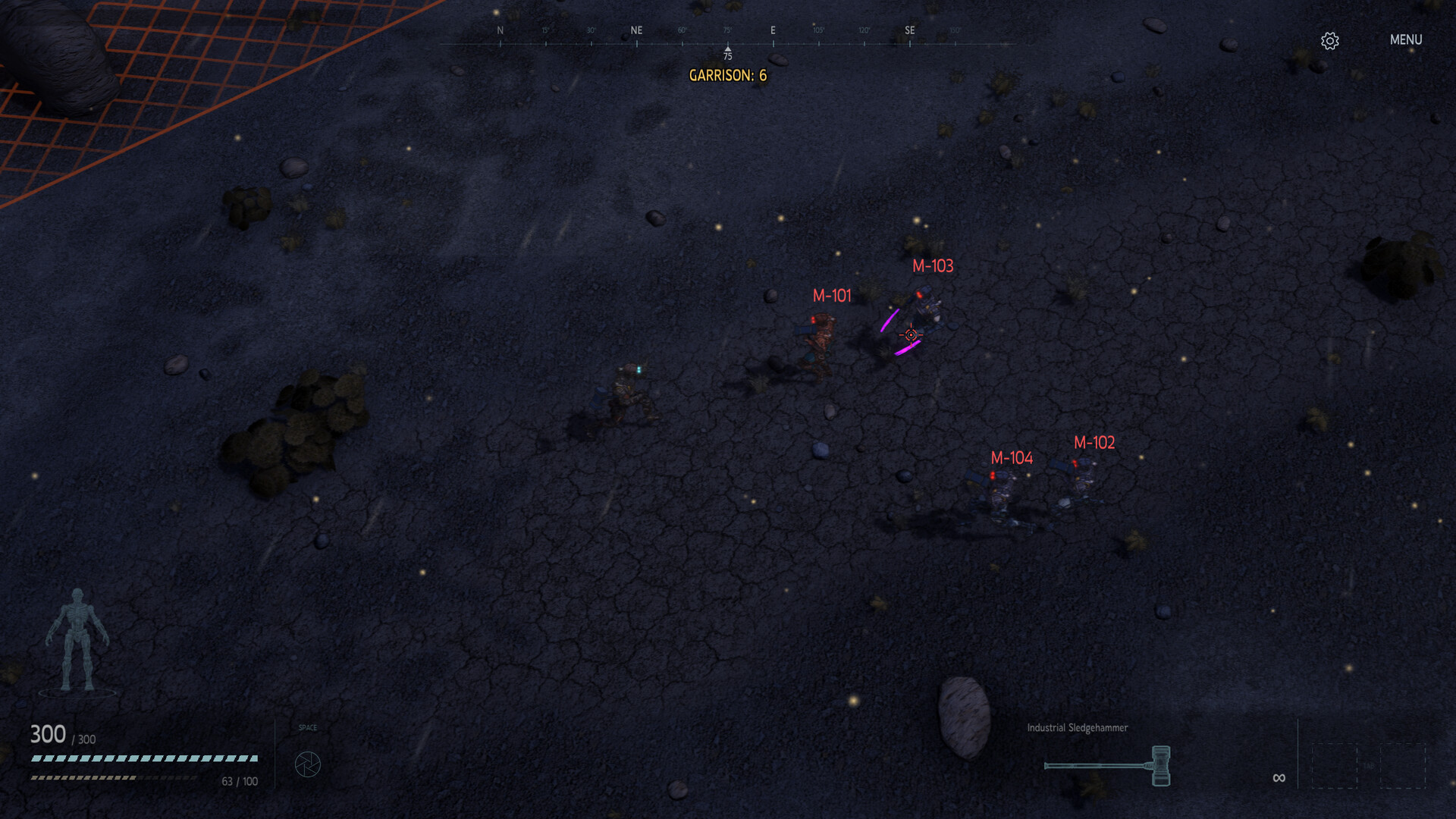
Combat targets individual body parts
Robots have seven separately damageable body parts. Damaging legs affects movement, damage to arms impairs shooting, and destroying the head ends the fight. The protagonist shares those vulnerabilities because the human brain is housed in the robot’s head.
The developer lists seven damage types, including bullets, fire, plasma and electromagnetic attacks. Armor is fitted to individual areas such as the head, torso, arms, groin and legs, and its protection depends on the incoming damage. Equipment can also be recovered from defeated enemies.
The arsenal contains 28 weapons, ranging from pistols and a sledgehammer to a flamethrower and railgun. Seven gadgets include a magnetic trap, a cloaking device, a kamikaze drone and a hacking spider that can take control of another robot. Those gadgets currently belong to the online modes in the developer’s build; bringing them into the campaign remains planned work.
Online modes and the remaining roadmap
Multiplayer includes duels, free-for-all matches for up to eight robots, duos, four-versus-four battles and a sixteen-robot battle royale. Bots fill unused places. Online play has its own progression, equipment and battle pass rather than simply reusing the campaign’s structure.
The roadmap includes caravans, quests, guard and mining jobs, barter, additional regions leading toward MOLOCH’s Citadel, multiple endings and cooperative campaign play. These are plans, not a list of completed launch features.
On Steam, the developer estimates twelve to eighteen months in Early Access, with timing dependent on feedback. The game is planned as a paid purchase; the stated approach is that Early Access buyers receive the full version and subsequent updates without another purchase, while equipment affecting combat power is earned through play.